>>
30-MINUTE MEALS! Get the email series now →


A classic, buttery stuffing taught to me by my grandmother: crusty sourdough or French bread cubes, sautéed aromatics, fresh sage and thyme, and a golden, crisp top—perfect for holiday tables.
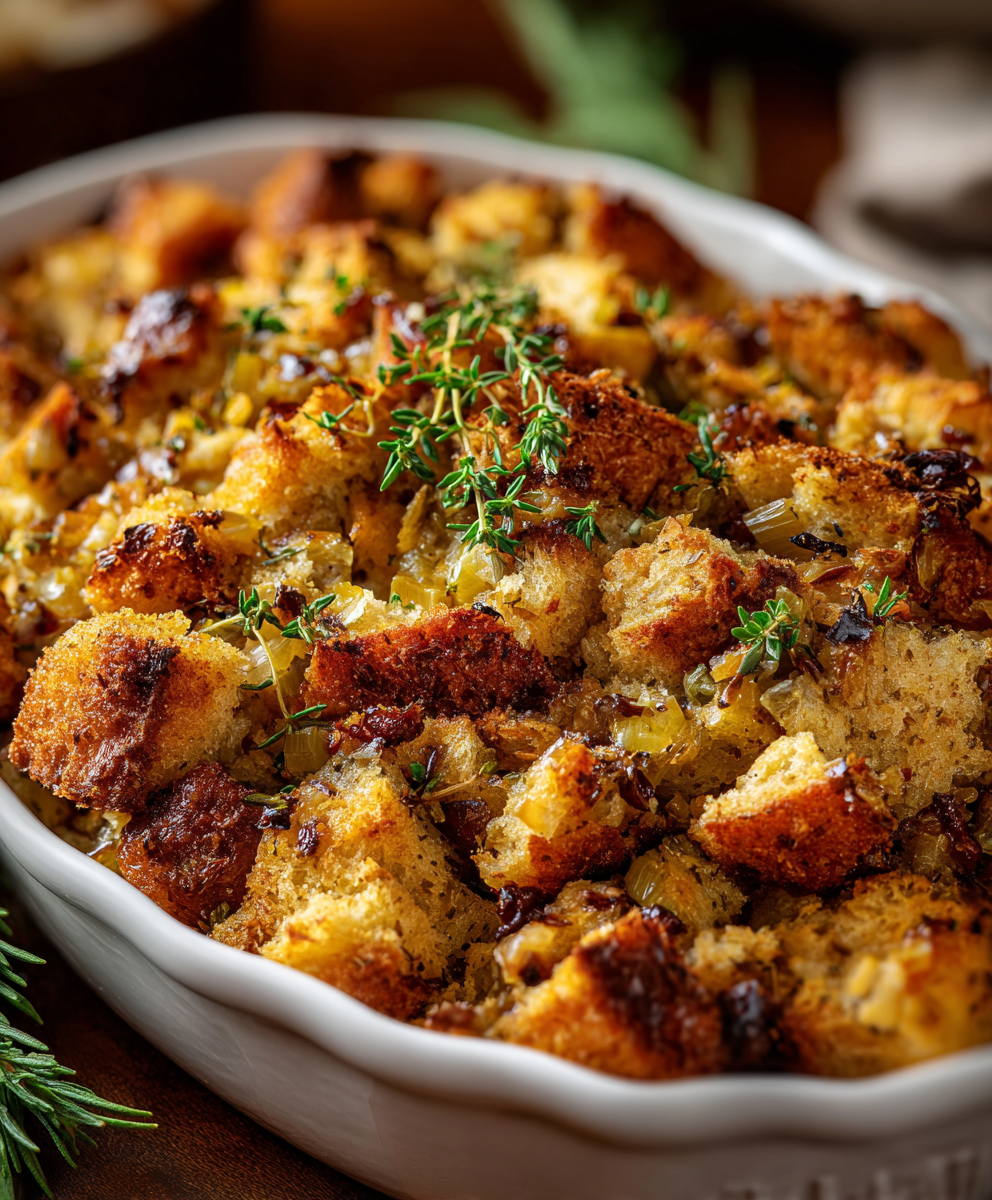
This is my grandmother's Thanksgiving stuffing, the one recipe that always guarantees a warm kitchen and an even warmer table. I can still picture her in the small farmhouse kitchen, tearing day-old sourdough into uneven cubes and humming while she browned onions and celery in a generous pool of butter. We called it magic because no matter how simple the ingredients, the finished dish tasted like home—comforting, savory, and richly aromatic. I first learned this combination during a chilly November when I wanted something familiar to anchor the holiday meal; it has lived on my holiday menu ever since.
What makes this dish special is the textural contrast: tender interior crumbs that soak up flavorful broth, contrasted by a crisp, golden top. The fresh sage and thyme—snipped and stirred in at the last minute—lift the dish with herbal brightness while the butter and low-sodium broth create a silky mouthfeel. There are no complicated steps or exotic ingredients, just good bread, patient sautéing, and a few thoughtful techniques: dry the bread to concentrate flavor, use warm broth so the cubes hydrate evenly, and cover while baking to trap steam before uncovering to crisp the surface. When my family gathers and someone takes that first spoonful, the room always quiets for a moment; it's the kind of recipe that makes people pause and remember.
In my experience, guests ask for the stuffing first, even before the turkey is carved. My niece once declared this the only dish she would pack for college; my father always requests an extra pan to take home. Over the years I've learned small adjustments—like toasting the bread intensively if the house is humid—to get consistent results every time.
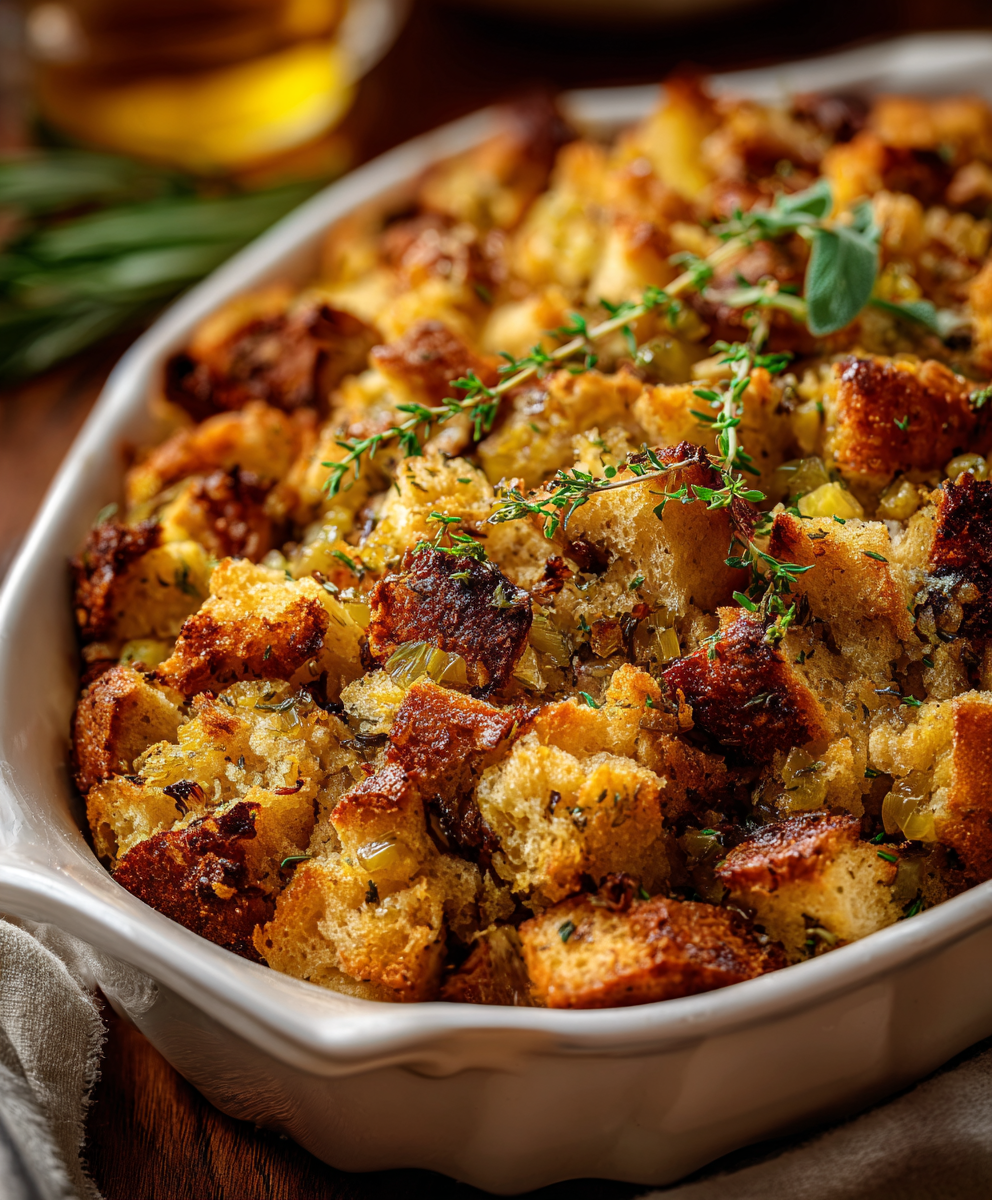
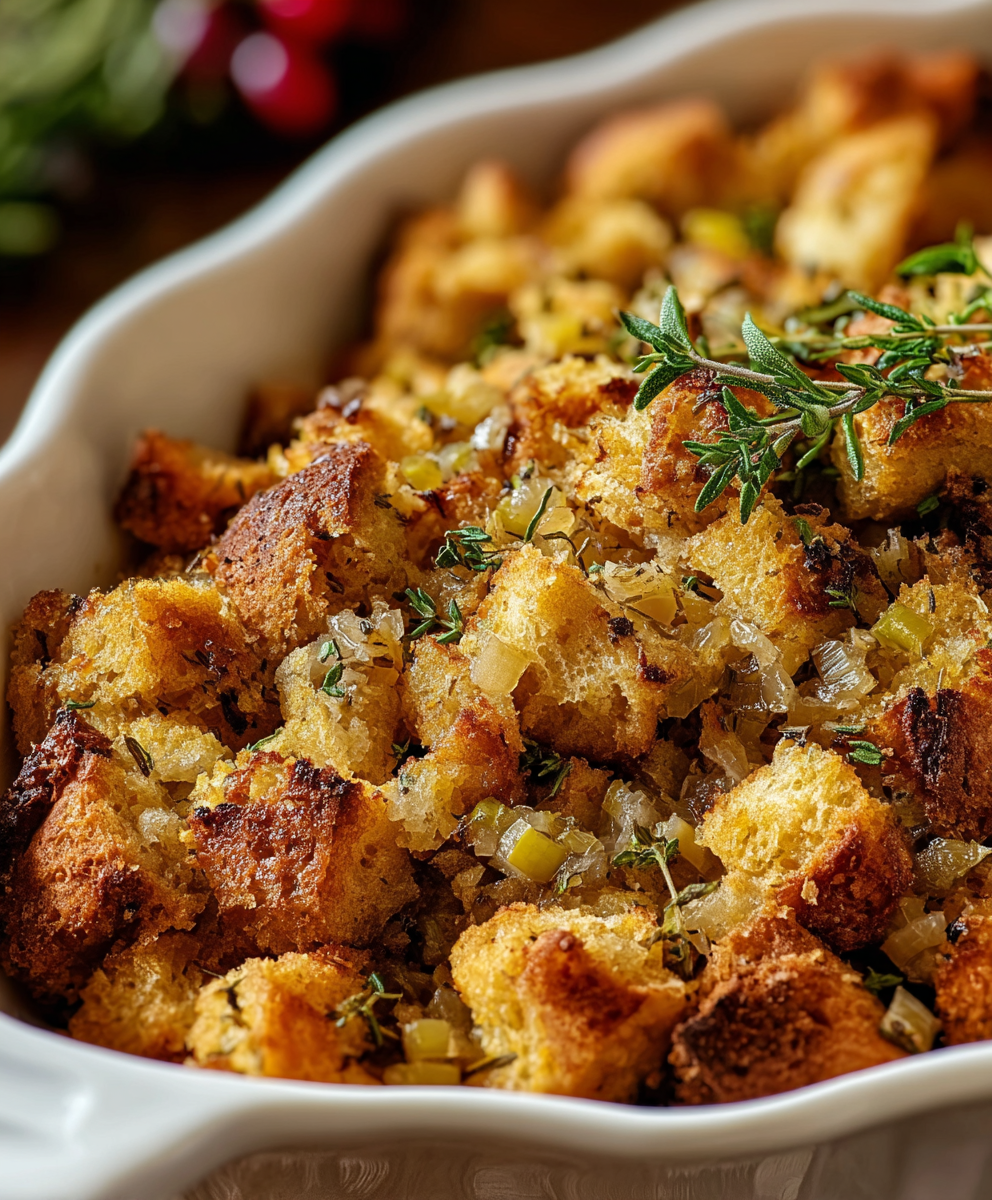
My favorite part is the aroma that fills the house in those last 15 minutes of baking; it always draws people to the kitchen. One Thanksgiving my brother snuck a spoonful while the turkey was still resting—he swore it was better than the main course. The combination of herbs and butter is what turns simple bread into a memorable side.
Store any leftovers in an airtight container in the refrigerator for up to 4 days. To freeze, cool completely, portion into freezer-safe containers, and freeze for up to 3 months. Reheat from frozen covered at 325°F until warmed through, about 45–60 minutes, or thaw overnight in the refrigerator and bake 20–30 minutes. Use shallow, oven-safe containers to preserve crispness; remove the lid for the last 10 minutes to refresh the top. If the stuffing seems dry during reheating, splash a few tablespoons of warm broth over the top and cover for moisture retention.
If you need to adapt, use these swaps thoughtfully: replace chicken broth with vegetable broth to make this meat-free; replace butter with a vegan margarine for a dairy-free version though the flavor will be slightly different. Gluten-free stuffing is possible with firm gluten-free bread but expect a denser texture; toast these cubes a touch longer. Swap sage for 1 1/2 tablespoons dried sage only if fresh isn't available, but reduce by half since dried is more concentrated. Add 1/2 teaspoon poultry seasoning if you like a deeper, nostalgic spice blend.
This dish pairs classically with roast turkey and pan gravy, bright cranberry sauce, and roasted root vegetables for contrast. Garnish with a few extra torn sage leaves or a sprinkle of chopped parsley for color. For a brunch twist, serve warm stuffing alongside scrambled eggs or top with roasted mushrooms and a drizzle of browned butter for a rustic, celebratory side. Smaller portions can be presented in ramekins for individual servings at a dinner party.
Stuffing—or dressing, depending on region—has long been a cornerstone of American holiday meals, evolving from European savory bread puddings. Early American cooks adapted bread-based stuffings to local ingredients, introducing sage and thyme as common herbs. My grandmother's recipe follows the classic New England-style approach: simple aromatics, fresh herbs, and a buttery base. Across the country you'll find variations that include cornbread, oysters, chestnuts, or sausage, each reflecting local tastes and seasonal availability. This version honors the mid-20th century family table with restrained seasoning and an emphasis on texture.
In autumn, fold in roasted butternut squash cubes or diced apples for a sweet-earthy contrast; reduce the broth slightly so the fruit doesn't make the mixture soggy. For winter holidays, add toasted pecans or chopped chestnuts for crunch and warmth. During spring and summer, lighten the dish by using a higher proportion of fresh herbs, adding a handful of blanched asparagus tips, or stirring in lemon zest for brightness. These swaps shift flavor without losing the comforting core of the recipe.
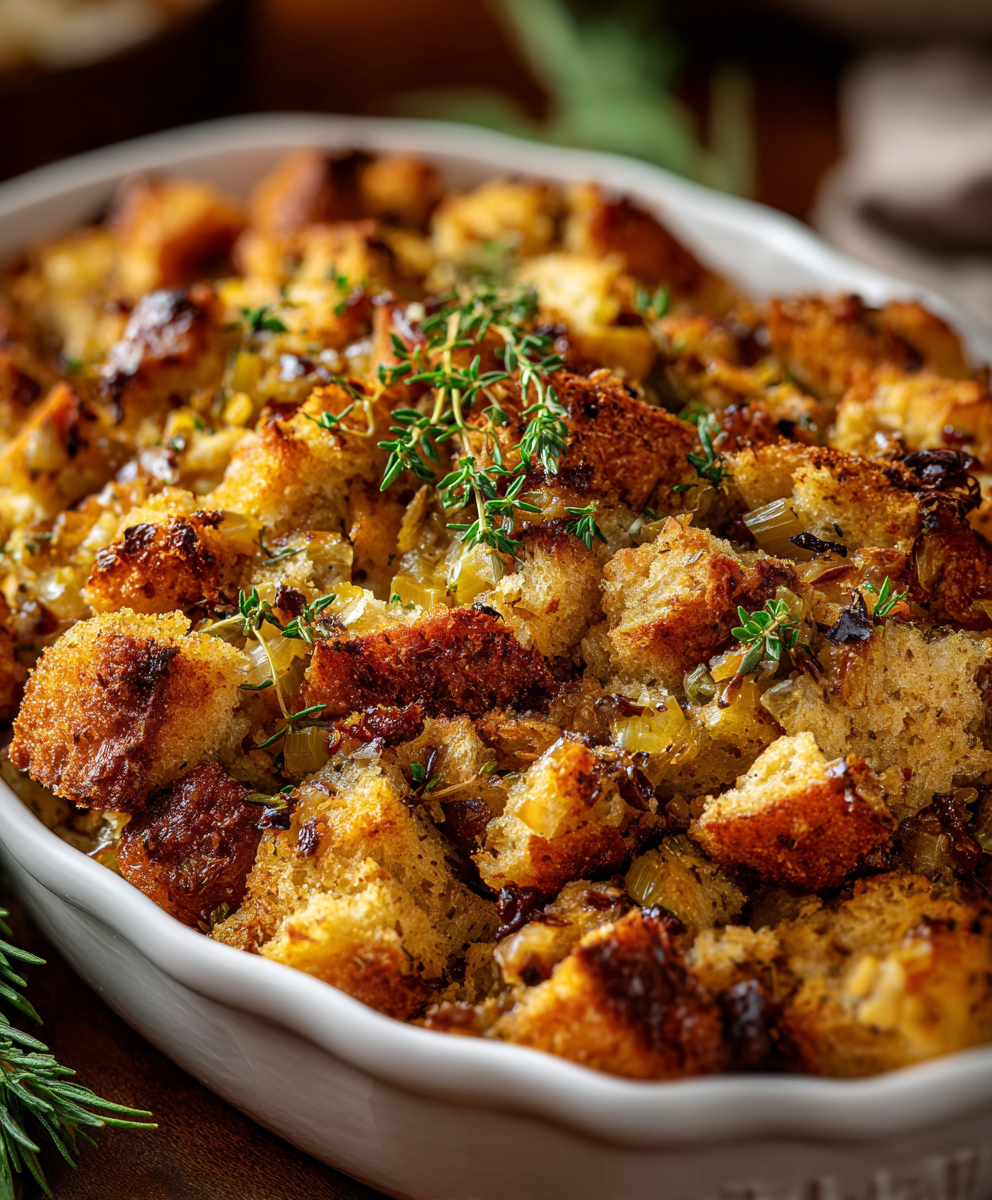
Every year I receive messages from readers saying this brings back memories or that it "saved" their holiday. One reader emailed to say she now prepares this as a vegetarian centerpiece for a small Thanksgiving because it pleases meat-eaters and vegetarians alike. Another family told me they served it at a rehearsal dinner and now include it at every celebration. The simplest feedback is often the most meaningful: a friend once said, "This tastes like Thanksgiving the way I remember it." That is the true reward of sharing a family recipe.
To streamline holiday prep, dry the bread 1–2 days ahead and store in a breathable container. Sauté the vegetables early in the day and refrigerate in an airtight container; reheat gently before combining. Assemble the mixed stuffing and cover tightly; refrigerate overnight and bake the following day. For travel to a potluck, bake at home and reheat covered at the host's oven for 20–30 minutes, uncovering briefly at the end to re-crisp the surface.
Bring this dish to your next holiday table and let it become part of your family's traditions. It's comfort, history, and a little kitchen magic all in one pan—made better by sharing.
Toast or dry the bread cubes until just dry; avoid browning to keep the interior soft.
Warm the broth before adding to help the bread absorb evenly and avoid cold spots.
Sauté the onion and celery slowly until soft but not browned to preserve sweetness and prevent bitterness.
If reheating, cover the dish to retain moisture and uncover for the last 10 minutes to refresh the top.
This nourishing grandma’s thanksgiving stuffing recipe is sure to be a staple in your kitchen. Enjoy every moist, high protein slice — it is perfect for breakfast or as a wholesome snack any time.
Yes. For best texture, dry the bread overnight on the counter or toast it in a 300°F oven for 15–20 minutes until dry. This prevents a soggy interior.
If baking immediately, reduce the added broth slightly. Warm the broth before adding so the bread hydrates evenly.
This Grandma’s Thanksgiving Stuffing recipe makes perfectly juicy, tender, and flavorful steak every time! Serve with potatoes and a side salad for an unforgettable dinner in under 30 minutes.
Preheat oven to 350°F. Cube bread into roughly 1-inch pieces and dry overnight or toast on a sheet pan at 300°F for 15–20 minutes. Dice onion and chop celery and herbs; measure broth and melt butter.
In a large skillet over medium heat, melt butter and add onion and celery. Cook 5–7 minutes until translucent and tender, seasoning lightly with salt and pepper. Add a splash of broth if necessary to prevent sticking.
Place bread cubes in a large bowl. Pour the sautéed vegetables and butter over the bread, add chopped herbs, and toss. Gradually add warm broth until the mixture is evenly moistened but not soupy. Taste and adjust salt and pepper.
Transfer the mixture to a greased 9x13-inch baking dish, cover with foil, and bake at 350°F for 30 minutes. Remove the foil and bake an additional 15 minutes until the top is golden and crisp. For extra crispness, broil 1–2 minutes watching closely.
Allow to rest 5–10 minutes before serving so juices settle. Serve warm alongside turkey, gravy, and cranberry sauce. Store leftovers in refrigerator for up to 4 days or freeze up to 3 months.
Last Step: Please leave a rating and comment letting us know how you liked this recipe! This helps our business to thrive and continue providing free, high-quality recipes for you.
Leave a comment & rating below or tag
@moodcooks on social media!
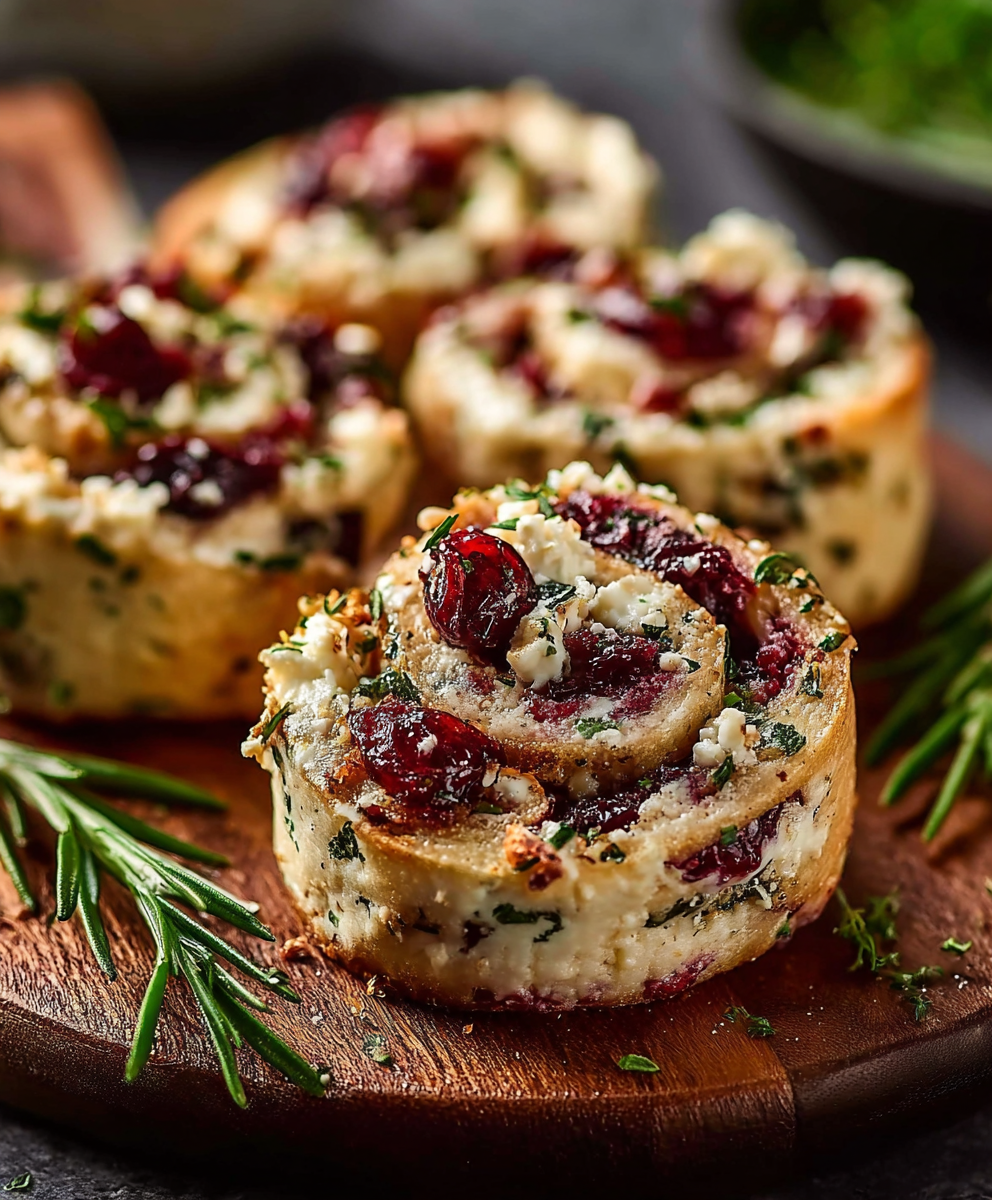
Buttery puff pastry rolled with tangy cream cheese, bright cranberries, salty feta and fresh herbs — effortless, elegant pinwheels perfect for gatherings or a cozy snack.

A simple, reliable dough that produces a crispy exterior, chewy interior and those coveted bubbly pockets — perfect for home ovens or a pizza stone.
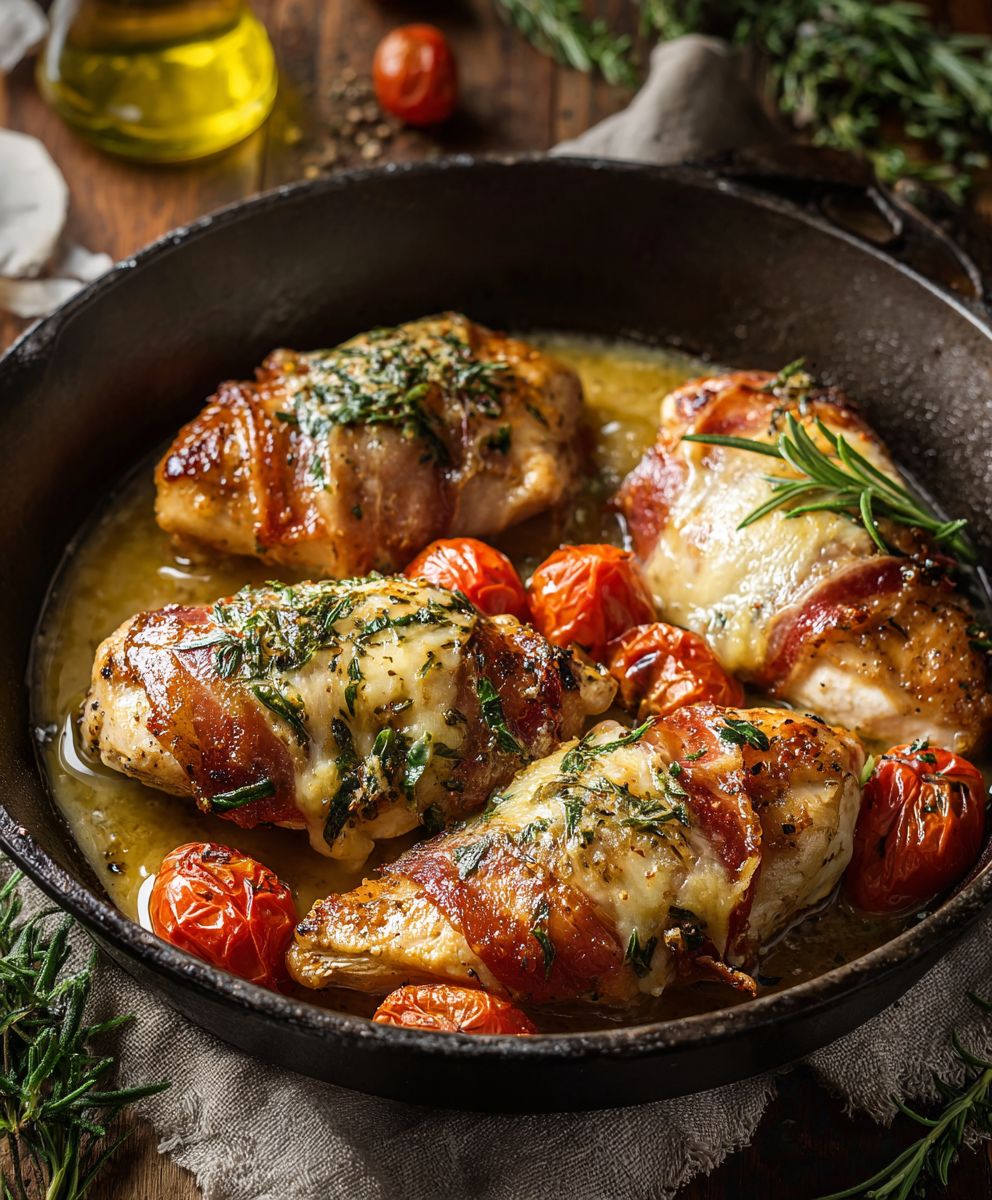
Tender chicken breasts wrapped in prosciutto and sage, pan-seared and finished in a bright wine-and-broth sauce — a quick, elegant weeknight favorite.
Leave a comment & rating below or tag @moodcooks on social media!
Enjoyed this recipe? Share it with friends and family, and don't forget to leave a review!
This recipe looks amazing! Can't wait to try it.
Comments are stored locally in your browser. Server comments are displayed alongside your local comments.

Join to receive our email series which contains a round-up of some of our quick and easy family favorite recipes.