>>
30-MINUTE MEALS! Get the email series now →


A simple, authentic Cantonese-style chow mein with crisped egg noodles, tender veggies, and a savory sauce — ready in under 30 minutes and perfect for weeknights.
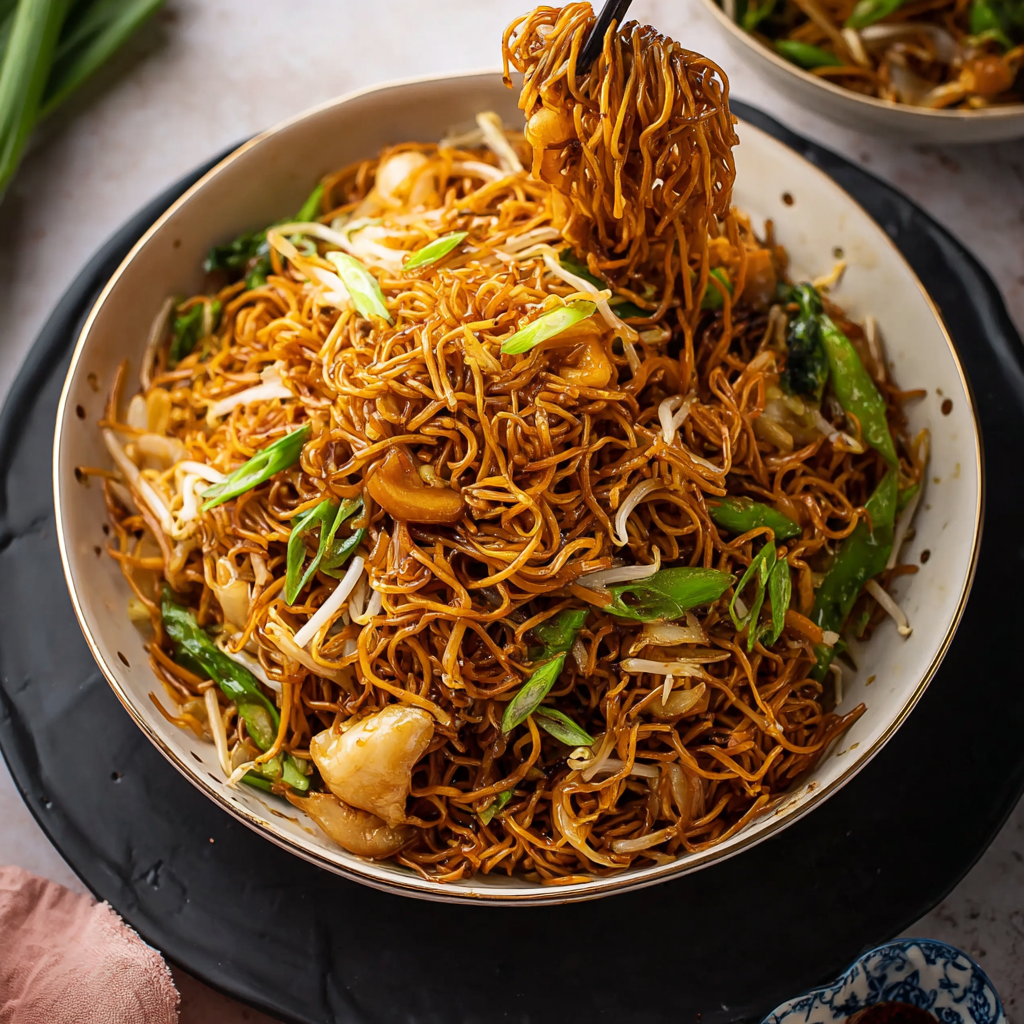
This Cantonese-style chow mein is one of those dishes that brings both comfort and nostalgia to the table. I first learned this method while watching a street-side hawker in Hong Kong unfold a bundle of thin egg noodles and transform them into a golden, crunchy nest. The combination of slightly blistered noodles, firm bean sprouts, and the bright bite of green onions makes a dish that is texturally satisfying and quick to make. It’s an ideal midweek meal when you want something that feels special but doesn’t demand hours in the kitchen.
I use fresh Hong Kong-style egg noodles for the authentic chew and a quick hot-water soak to soften them just enough before crisping. The sauce is a straightforward blend of dark and regular soy, oyster, and fish sauce balanced with a touch of sugar; it clings to the noodles and vegetables, giving each bite a glossy, savory finish. This version is uncomplicated, relies on pantry-friendly ingredients, and rewards attention to a few simple techniques: even heating, a short soak, and confident flipping of the noodle bed to build those crisp edges we love.
I’ve served this at casual dinners and potlucks; guests always ask how the noodles get that texture. I tell them it’s patience and a hot wok. My partner loves the contrast of the tender inner noodle and the crispy outside. Once, a neighbor stopped by, smelled the wok and left her plans to join us for dinner — that’s how memorable the aroma can be.

I love this version because it rewards small, deliberate actions: proofing the noodles, separating the green onion parts, and letting the noodles sit to make a crust. The family notices those details, too. One weekend, after demonstrating the flip-and-press technique, my teenager insisted on taking over — and nailed the crisp edges. That kind of kitchen confidence is one of the reasons I keep coming back to this method.
Leftovers can be stored, but the signature crisp will soften. Place cooled noodles in an airtight container and refrigerate for up to 2 days. To reheat and restore some texture, spread the noodles in a nonstick skillet over medium-high heat with a teaspoon of oil and press gently to re-crisp for 2 to 3 minutes. Do not microwave if you want to preserve texture, as that will steam the noodles and make them soggy.
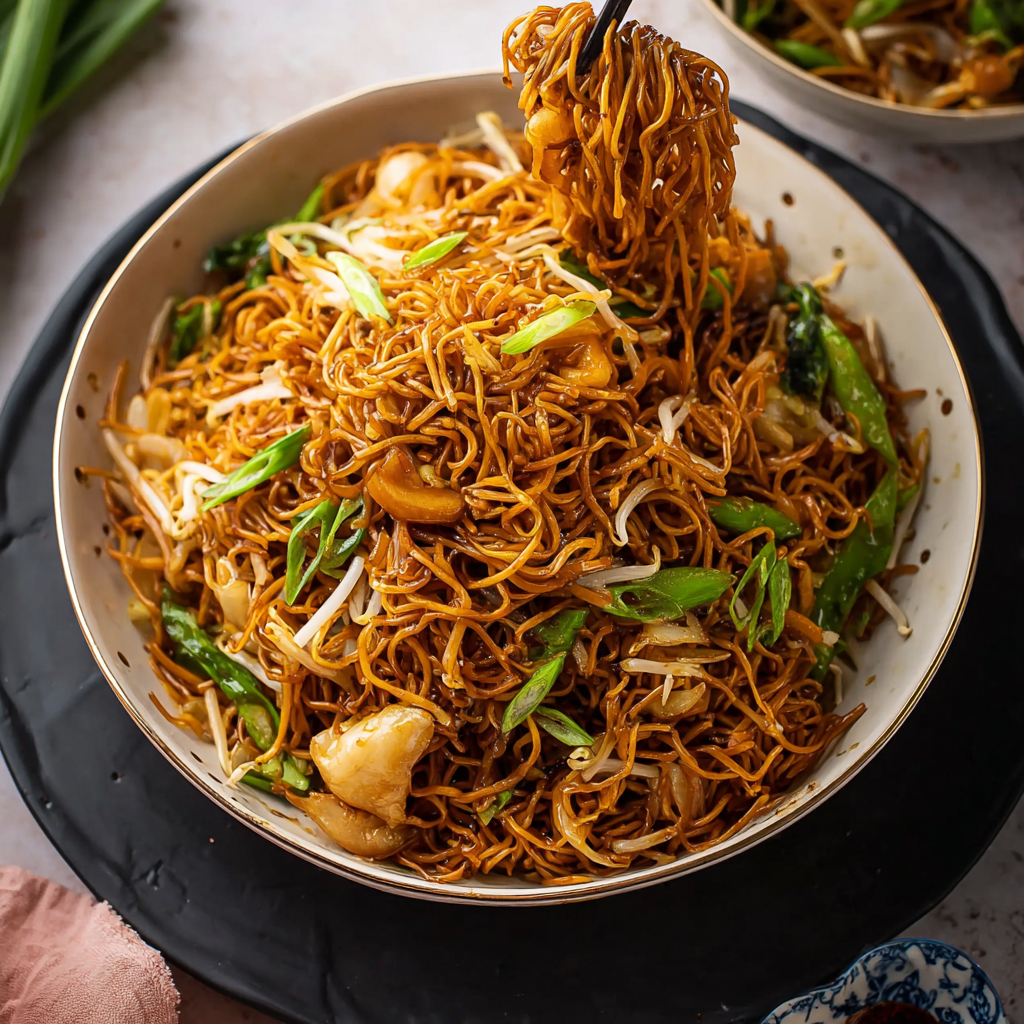
If fresh chow mein noodles are unavailable, use dried chow mein or thin egg noodles and increase the soak time slightly. For vegetarian options swap oyster and fish sauce for an equivalent mix of mushroom-based vegetarian oyster sauce and a dash of tamari for depth. To reduce gluten, choose a gluten-free soy sauce substitute, but know the dish will lose some of its classic color and mouthfeel. Use firm tofu or sliced king oyster mushrooms as protein additions.
Serve with simple accompaniments to balance the savory noodles: a crisp cucumber salad, pickled vegetables, or a light clear broth with scallions. Garnish with extra chopped green onions and a sprinkling of toasted sesame seeds. For a fuller meal, plate alongside steamed bok choy or quick-pan-fried Chinese broccoli tossed with a little oyster sauce.
Chow mein is a ubiquitous Cantonese street and home dish, with regional variations across southern China and overseas Chinatowns. The Cantonese technique emphasizes a contrast between a crisp noodle sheet and tender toppings, a style popularized by teahouses and street vendors. The word literally means 'fried noodles' and speaks to centuries of wok-cooking tradition where speed and high heat transform simple ingredients into deeply flavored meals.
In spring, add snow peas and thinly sliced asparagus for a fresh snap. In summer, toss in shredded summer squash and a squeeze of lime for brightness. During colder months, include thinly sliced braised beef or shiitake mushrooms to make the dish heartier. Adjust the amount of bean sprouts and green onions seasonally to preserve the balance of textures.
Prep everything in advance: soak and drain noodles, slice onions and green onions, and mix the sauce into a sealed container. Refrigerate components separately and stir-fry just before eating to retain crispness. Use shallow airtight containers and remove excess moisture from vegetables with paper towels to prevent steaming the noodles when combined.
There’s a real joy in the sizzle and the quick transformation that chow mein offers. It’s an ideal dish for busy cooks who still want to showcase technique and flavor. Try it once and you’ll find the small rituals — the hot wok, the brief soak, and the confident flip — become part of your kitchen repertoire.
Drain noodles thoroughly after soaking; excess water prevents proper crisping.
Separate green onion whites and greens; whites go in early for aroma, greens finish the dish.
Use a very hot wok and let the noodles sit undisturbed to form a golden crust before flipping.
Add bean sprouts at the end so they remain crisp and avoid steaming the noodles.
This nourishing classic cantonese chow mein recipe is sure to be a staple in your kitchen. Enjoy every moist, high protein slice — it is perfect for breakfast or as a wholesome snack any time.
Soak fresh egg noodles for 30 seconds to 1 minute in boiling water; they should loosen but not become floppy.
Yes. To restore some crispness, reheat in a hot skillet with a teaspoon of oil and press lightly until edges re-crisped.
This Classic Cantonese Chow Mein recipe makes perfectly juicy, tender, and flavorful steak every time! Serve with potatoes and a side salad for an unforgettable dinner in under 30 minutes.
Pour boiling water over 12 ounces of fresh chow mein egg noodles and let sit 30 seconds to 1 minute until softened. Drain very well in a colander and set aside.
Combine dark soy, regular soy, oyster sauce, fish sauce, sugar, and water in a small bowl. Stir until sugar dissolves and set aside.
Heat 1 tablespoon corn oil in a hot wok. Add sliced onion and white parts of green onions. Stir-fry 1 minute until fragrant, then remove and reserve.
Heat 1 tablespoon oil in the wok, add drained noodles spread in a thin layer, and cook undisturbed about 2 minutes. Flip, add remaining tablespoon oil around the perimeter, and cook another 2 minutes until crisp.
Return sautéed onions, add green parts of green onions and 2 cups bean sprouts, pour sauce over, and gently toss 1-2 minutes until combined and heated through.
Remove from heat, drizzle 1 teaspoon sesame oil, toss lightly, and serve immediately to preserve crisp texture.
Last Step: Please leave a rating and comment letting us know how you liked this recipe! This helps our business to thrive and continue providing free, high-quality recipes for you.
Leave a comment & rating below or tag
@moodcooks on social media!

Buttery puff pastry rolled with tangy cream cheese, bright cranberries, salty feta and fresh herbs — effortless, elegant pinwheels perfect for gatherings or a cozy snack.

A simple, reliable dough that produces a crispy exterior, chewy interior and those coveted bubbly pockets — perfect for home ovens or a pizza stone.

Tender chicken breasts wrapped in prosciutto and sage, pan-seared and finished in a bright wine-and-broth sauce — a quick, elegant weeknight favorite.
Leave a comment & rating below or tag @moodcooks on social media!
Enjoyed this recipe? Share it with friends and family, and don't forget to leave a review!
This recipe looks amazing! Can't wait to try it.
Comments are stored locally in your browser. Server comments are displayed alongside your local comments.

Join to receive our email series which contains a round-up of some of our quick and easy family favorite recipes.